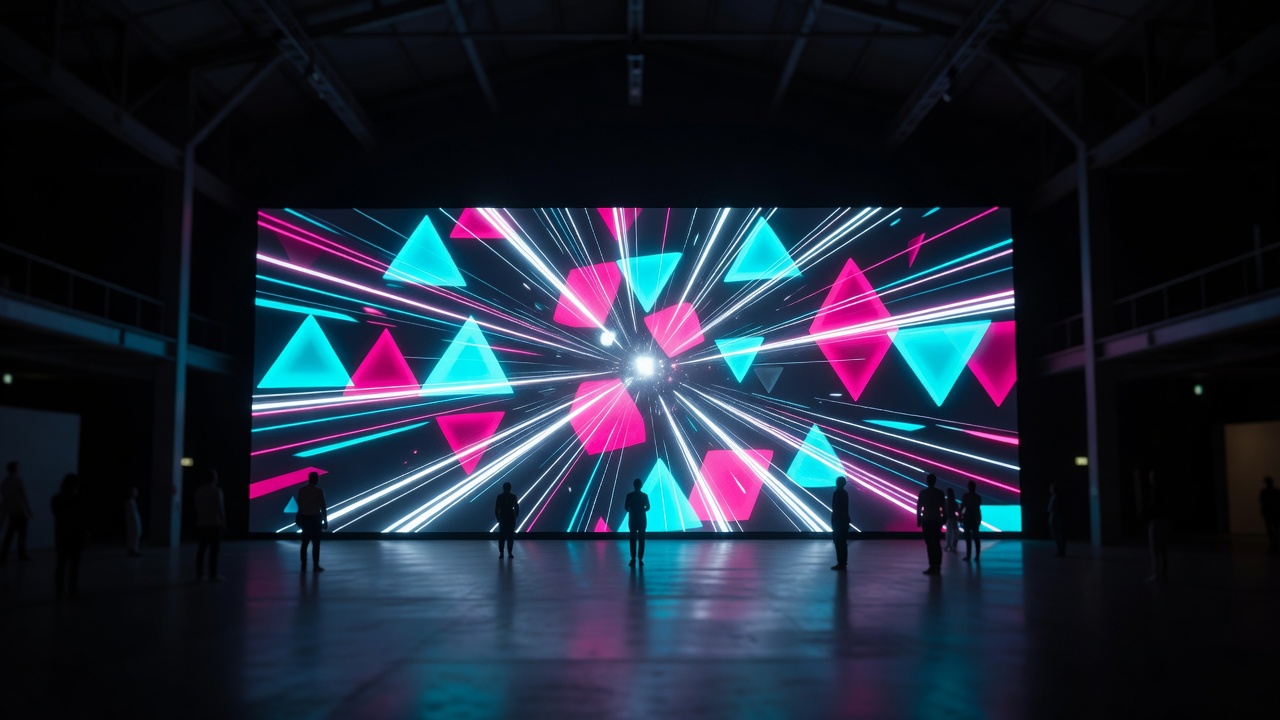
Field video: Pro AVLS
A video wall is not a large television. That distinction sounds obvious until you are standing in a mechanical room at hour eleven of a commissioning day, watching a seam that looked invisible in the render now glowing like a fault line under house lights. Large-format and multi-panel display systems carry a different set of field realities than single-unit commercial screens, and getting comfortable with them before the first truck arrives saves significant pain downstream.
The first decision that shapes everything else is whether the installation is direct-view LED or a tiled LCD array. Direct-view LED panels are modular by design — they snap together in cabinets, tolerate ambient light aggressively, and can be scaled to almost any dimension. LCD arrays are less expensive per square foot for smaller configurations and deliver excellent image uniformity within each panel, but the bezels — even ultra-narrow ones — remain a physical reality. Under certain lighting conditions or with certain content types, those bezels disappear. Under others, they define the wall. Know your content and your ambient light before you commit to a panel technology.
Pixel pitch is the number that appears most often in large-format conversations, and it is genuinely important, but it is misused as often as it is applied correctly. Pitch describes the distance between LED elements — smaller pitch means more resolution per unit area. The critical variable is minimum viewing distance. A fine-pitch cabinet that looks spectacular at eight feet looks indistinguishable from a coarser configuration at forty feet. Over-specifying pitch adds cost without adding perceptual value for the actual audience. Under-specifying creates a display that looks coarse in its own space. There is a field calculation for this, and it should be run against the real viewing distances of a specific installation, not a generic guideline.
Brightness is where many installations go wrong in both directions. Outdoor-rated panels can be so bright that they become visually aggressive in interior spaces. Panels specified for lobbies can wash out entirely when afternoon sun rakes across a south-facing atrium wall. Calibration after installation is not optional — it is part of commissioning. Panels from the same production run will have measurable variance, and a good installation includes a uniformity pass that brings the wall into visual coherence across its entire surface.
Content architecture for video walls deserves its own conversation. A single large canvas that happens to be made of tiles requires content built for that canvas. Distributed displays that each show independent content require a different scheduling approach. Multi-zone walls — where different regions carry different feeds — introduce complexity at the controller level that is often underestimated at the design stage. The display system and the content management system need to be specified together, not sequentially.
Structural and electrical requirements are load-bearing decisions made before a single panel is purchased. Video walls are heavy. LED cabinet systems carry significant per-square-foot weight, and that weight transfers to whatever is behind or beneath the display. Ceiling-hung installations require engineered rigging. Wall-mounted arrays require structural backing rated for dynamic load. Electrical feeds need to account not just for average draw but for peak draw during full-white content — the worst case, not the average. Data pathways for signal distribution need to be sized for the resolution the wall will actually run.
Serviceability is a topic that gets deferred until something fails, which is precisely the wrong time to think about it. Front-serviceable panels are significantly easier to maintain in a production environment than rear-access systems, especially when the wall is against a solid surface. Spare cabinets or tiles in inventory are not a luxury — they are part of the total system cost and should be included in the initial specification. Uniformity drift happens over time as LED elements age at slightly different rates, and a maintenance contract that includes periodic recalibration is worth budgeting for.
For teams going deep on specification and commissioning practices, an in-depth large-format display reference covers configuration, scale, and long-term operational considerations in detail.
Wikipedia's entry on the video-wall format covers the tiling configurations, bezel considerations, and controller architectures that define how large-format multi-panel installations are assembled and driven.